
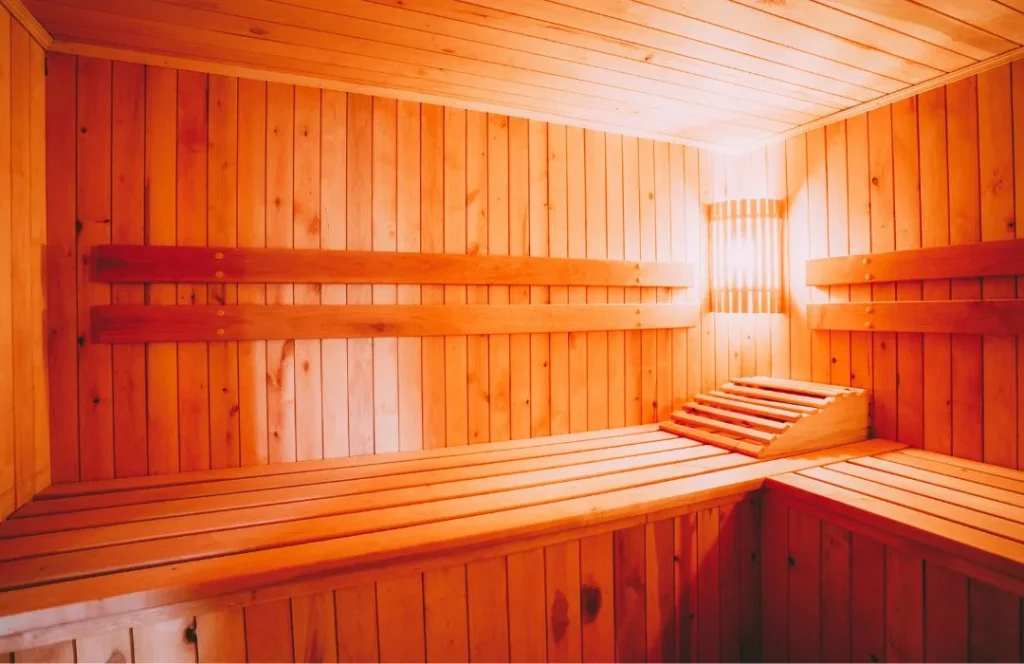
What Is an Infrared Sauna?
Can Infrared Sauna Cause Skin Cancer? Before that, we must know what is infrared sauna.
well, Infrared saunas use invisible light waves to warm your body directly. These light waves, known as infrared radiation, are part of the electromagnetic spectrum—similar to visible light and radio waves. To picture it, think about how you feel warmth when standing near a hot stove. That’s infrared radiation at work, even though you can’t see it.
Infrared saunas utilize three types of infrared radiation, each with unique properties:
- Near-Infrared (NIR): Short wavelengths that penetrate shallow layers of the skin.
- Mid-Infrared (MIR): Medium wavelengths that reach deeper into tissues.
- Far-Infrared (FIR): Long wavelengths that are efficiently absorbed by the body.
For a relaxing and rejuvenating experience, explore Dhaka’s best spa packages at VIP Lotus Spa, the top spa center in Bangladesh.
Infrared Saunas vs. Traditional Saunas: What’s the Difference?
Traditional saunas heat the air around you, raising the temperature to as high as 185°F. This causes sweating by warming the air first and then your body. Infrared saunas, on the other hand, operate at a cooler temperature range, typically between 120°F and 140°F.
Instead of heating the air, infrared saunas use light waves to directly warm your body. This makes the experience more comfortable for many people while still promoting sweating and relaxation.
Do Infrared Saunas Increase the Risk of Skin Cancer?
Skin cancer is basically leads by ultraviolet (UV) radiation. It damages DNA in skin cells. UV rays, commonly from the sun, are a well-known risk factor for skin cancer.
Infrared radiation, however, works differently. While there’s some evidence that high-intensity infrared radiation—especially near-infrared—might cause skin damage, it doesn’t affect DNA in the same way UV radiation does. Because of this, the risk of skin cancer from infrared saunas is considered extremely low.
How Do Infrared Saunas Work?
Infrared saunas use invisible light waves, similar to the rays of the sun, to warm your body from the inside out. Traditional saunas that heat the air around you to create warmth, infrared saunas bypass the air entirely and directly heat your body.
In a traditional sauna, the surrounding air becomes very hot and humid, which in turn warms your body. Infrared saunas, however, rely on infrared light. An invisible part of the light spectrum—to penetrate your skin and tissues more deeply. This process provides a soothing, even heat without the intense temperatures and humidity of a standard sauna.
It’s a modern twist on the classic sauna experience, offering a gentler, more targeted way to relax and promote wellness.
How Infrared Radiation Affects Your Skin
While infrared radiation is unlikely to cause skin cancer, it can still have some effects on your skin:
- Potential Damage from High Intensity:
- Research has shown that prolonged exposure to intense near-infrared radiation may accelerate skin aging. For example, a 2005 study on mice linked high-intensity NIR to wrinkles and collagen breakdown, a process known as photoaging.
- Eye Safety Concerns:
- Long-term exposure to high-intensity infrared radiation could increase the risk of cataracts, which cloud the eye’s lens and impair vision.
Fortunately, infrared saunas operate at much lower intensities compared to the high-energy conditions in these studies, reducing the risk of such effects.
Can Infrared Saunas Promote Skin Healing?
Surprisingly, infrared saunas may offer skin benefits when used at controlled, low levels. Low doses of infrared radiation, also called low-level light therapy (LLLT), have shown potential in several areas:
- Accelerating wound healing.
- Reducing inflammation.
- Possibly improving skin conditions like acne or precancerous patches.
A 2009 study by Barolet and colleagues suggested that low doses of red and infrared light could even help prevent collagen breakdown, reducing wrinkles and promoting healthier, more elastic skin. However, it’s important to note that more research is needed to confirm these findings.
Intensity Matters: The Key to Infrared Safety
When it comes to the effects of infrared radiation, it all boils down to intensity. High-intensity infrared exposure, like that used in some lab studies, can harm the skin. For instance, a condition called erythema ab igne (a discoloration of the skin) has been linked to prolonged exposure to high levels of infrared radiation.
However, the lower, controlled levels found in infrared saunas are much safer and may even provide health benefits. Think of it as finding a sweet spot—just enough infrared radiation to be beneficial without causing harm.
For a relaxing and rejuvenating experience, check out our best massage services in Gulshan, offered by VIP Lotus Spa, the leading spa center in Bangladesh.
Conclusion
Infrared saunas offer a unique way to relax and potentially support skin health by using gentle, targeted warmth. While concerns about skin damage from infrared radiation exist, they largely pertain to intense, prolonged exposure—not the controlled, moderate levels typical in sauna use.
Remember, moderation and proper use are key to reaping the benefits of infrared saunas while minimizing any potential risks. As always, consult a healthcare professional if you have any health concerns or conditions before trying infrared therapy.
FAQs About Infrared Saunas and Skin Cancer
Q1. Can infrared saunas cause skin cancer?
No, infrared saunas are unlikely to cause skin cancer. Unlike ultraviolet (UV) radiation, which can damage DNA and increase cancer risk, infrared light does not have the same harmful effects on your skin cells.
Q2. How is infrared radiation different from UV radiation?
Infrared radiation heats the body by penetrating the skin, but it doesn’t damage DNA like UV radiation does. UV radiation can cause skin cancer, not infrared light.
Q3. Are there any risks linked with infrared saunas?
While infrared saunas are generally safe, prolonged or high-intensity exposure to infrared light may contribute to skin aging or mild irritation. Using saunas in moderation is key.
Q4. Can infrared saunas help with skin health?
Yes, in controlled doses, infrared light has been shown to promote skin healing, reduce inflammation, and potentially improve conditions like acne or wrinkles.
Q5. Should people with sensitive skin avoid infrared saunas?
People with sensitive skin should discuss a dermatologist. They may be more prone to irritation or discomfort.
Q6. Is it safe to use infrared saunas regularly?
Yes, regular use is generally safe when sessions are kept moderate in duration and intensity. If you have any health concerns, speak with a doctor before starting sauna therapy.